Fonfría to Triacastela, 8.66 miles
The day started off hard. I woke up feeling sad that this journey is almost over, and mad at myself for poor scheduling. The distance was only 6 miles, and I couldn't figure out why I scheduled such a short day when every other day is anywhere from 12-20 miles. Since I prebooked all my accommodations, it was too late to change anything. All I could think was "what a wasted day" since I still have 140 miles to go.
Turns out it's been a great day.
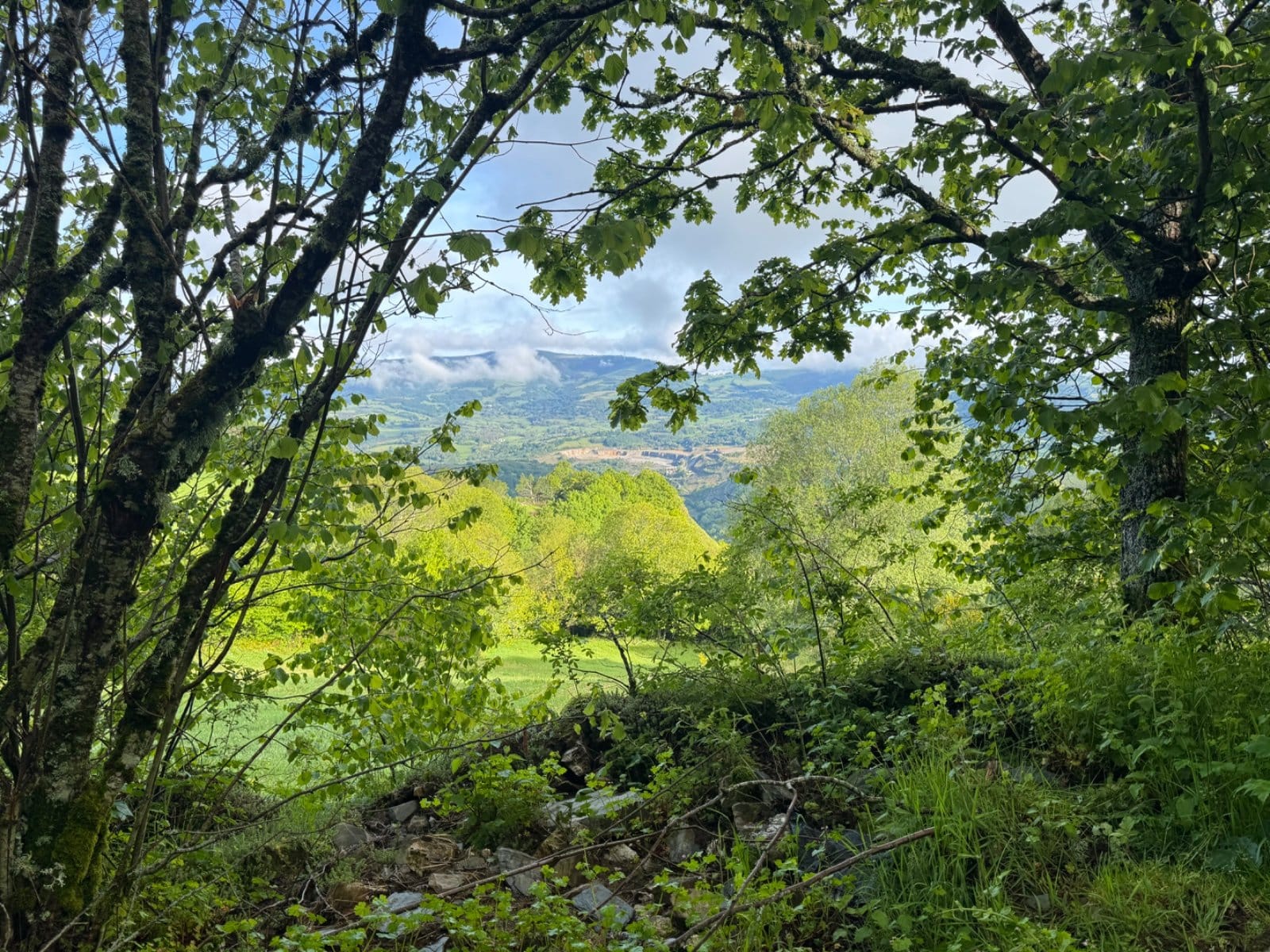
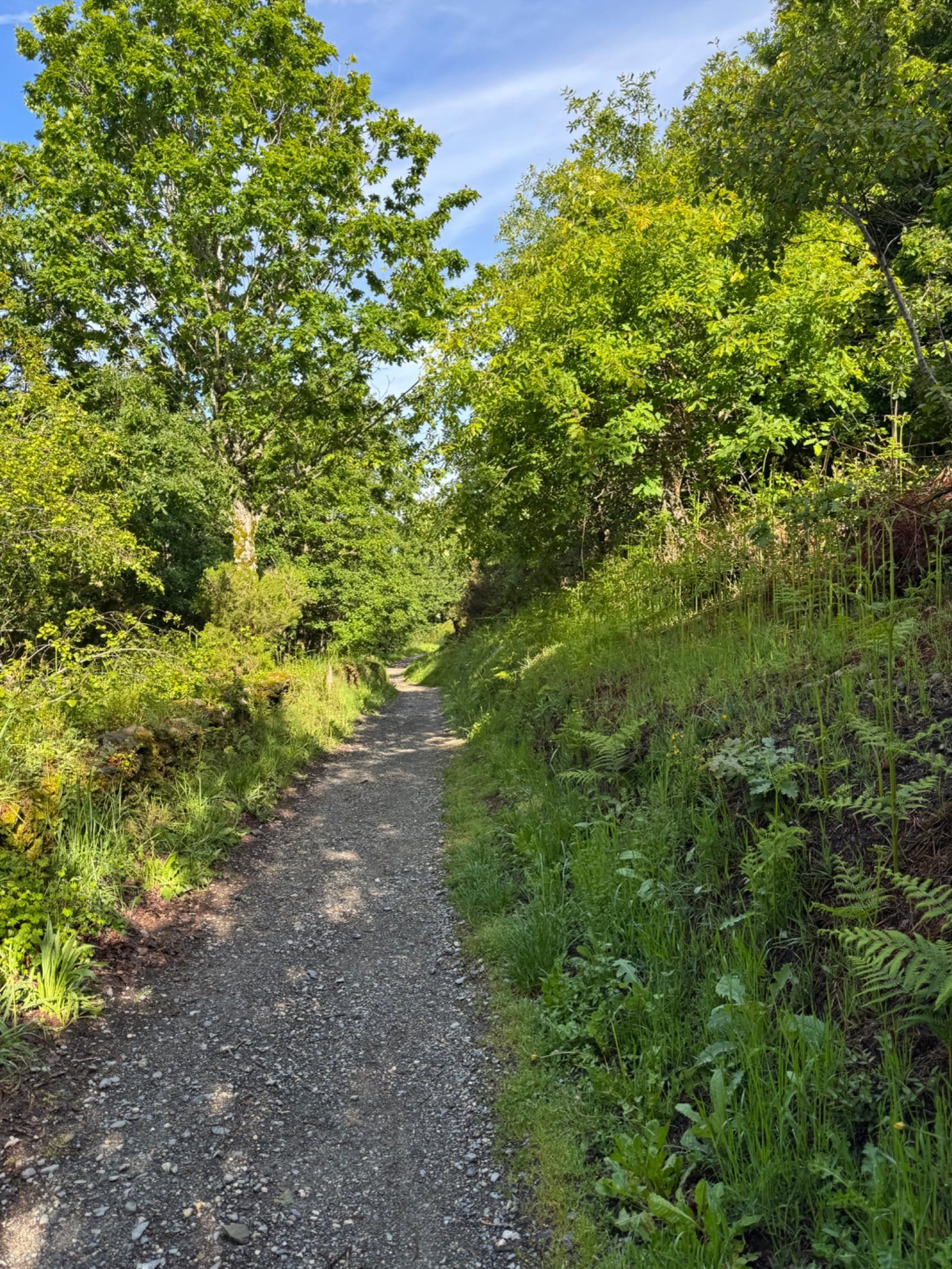
I didn't start walking until 9:00, feeling no reason to start earlier since it was only a 2.5 hour walk. I decided to take my own advice—I walked slowly, listened to the birds, observed and was in awe of the scenery around me. A deer actually jumped out of the bushes and froze on the path right in front of me and I froze too. We stared at each other and all I could think was "do deer attack humans?" But I knew better. After about a minute the deer ran up the mountainside. That was a rare moment in time and made me smile.
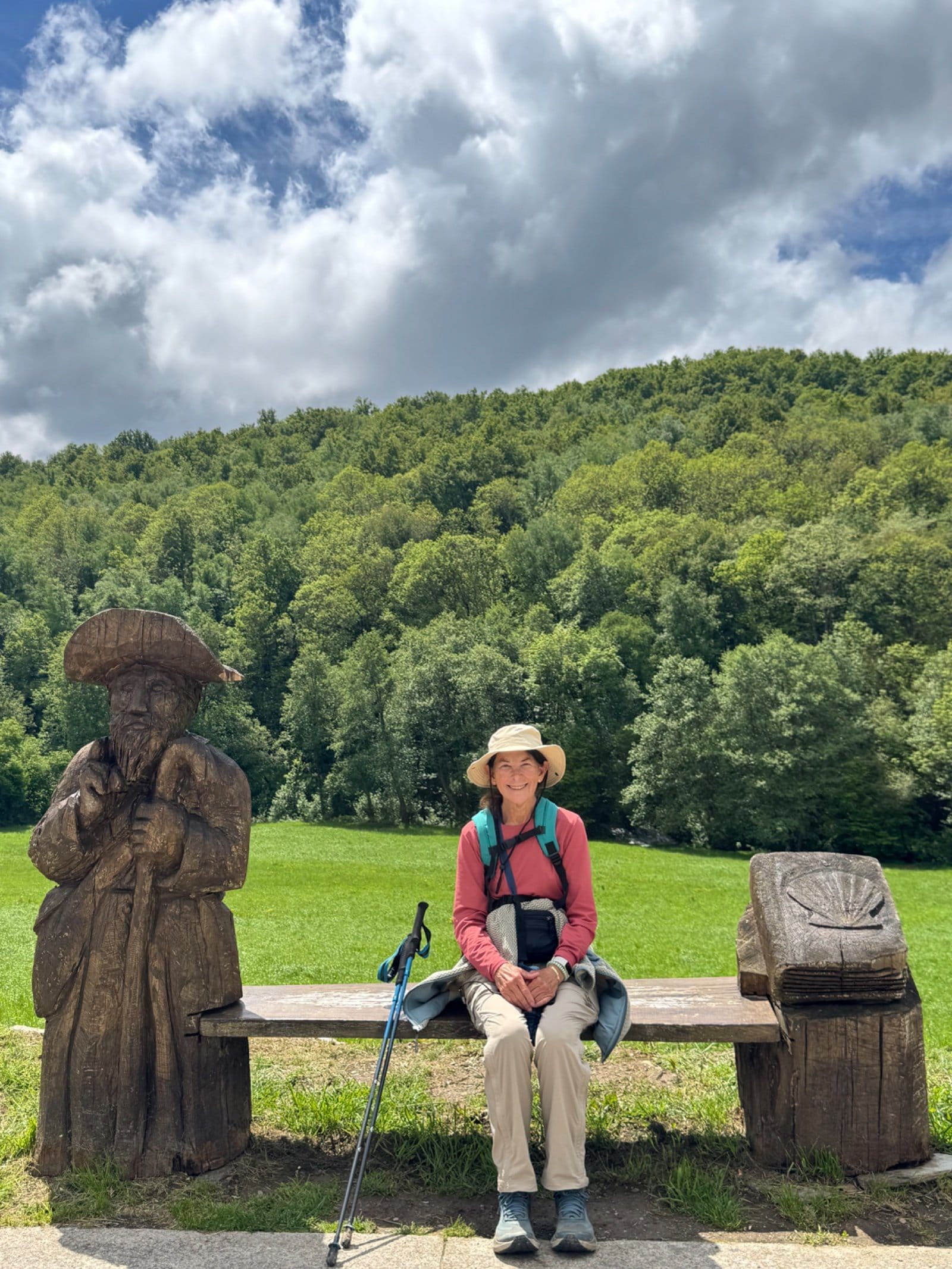
I got into town about 11:30 but couldn't check into my albergue until 2:00, so I had to wander around and eat to pass the time. Triacastela is actually a beautiful, fascinating small village with tremendous history. It's one of the classic stopping points on the Camino. Only about 600-700 people live here and it feels very quiet and rural. Most of the buildings are stone, with narrow streets, green hills and a peaceful mountain feel.
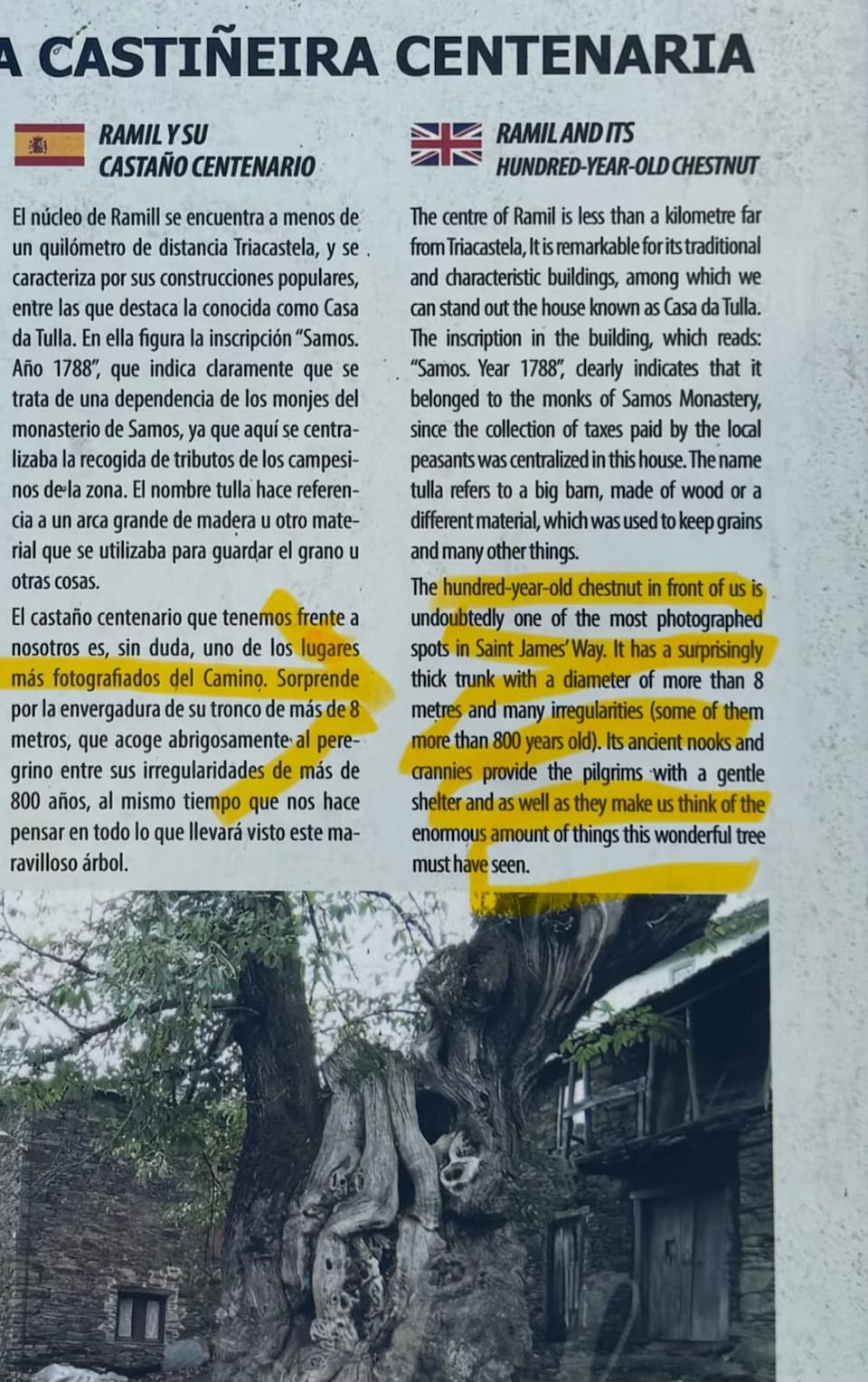
The name "Triacastela" means 3 castles which existed here many centuries ago. The village became important in the Middle Ages because pilgrims walked through here on their way to Santiago. Pilgrims would stop here for food, shelter, and recovery before continuing toward Sarria and eventually Santiago. Today, Triacastela is still a small village and remains an important stopping point for pilgrims.
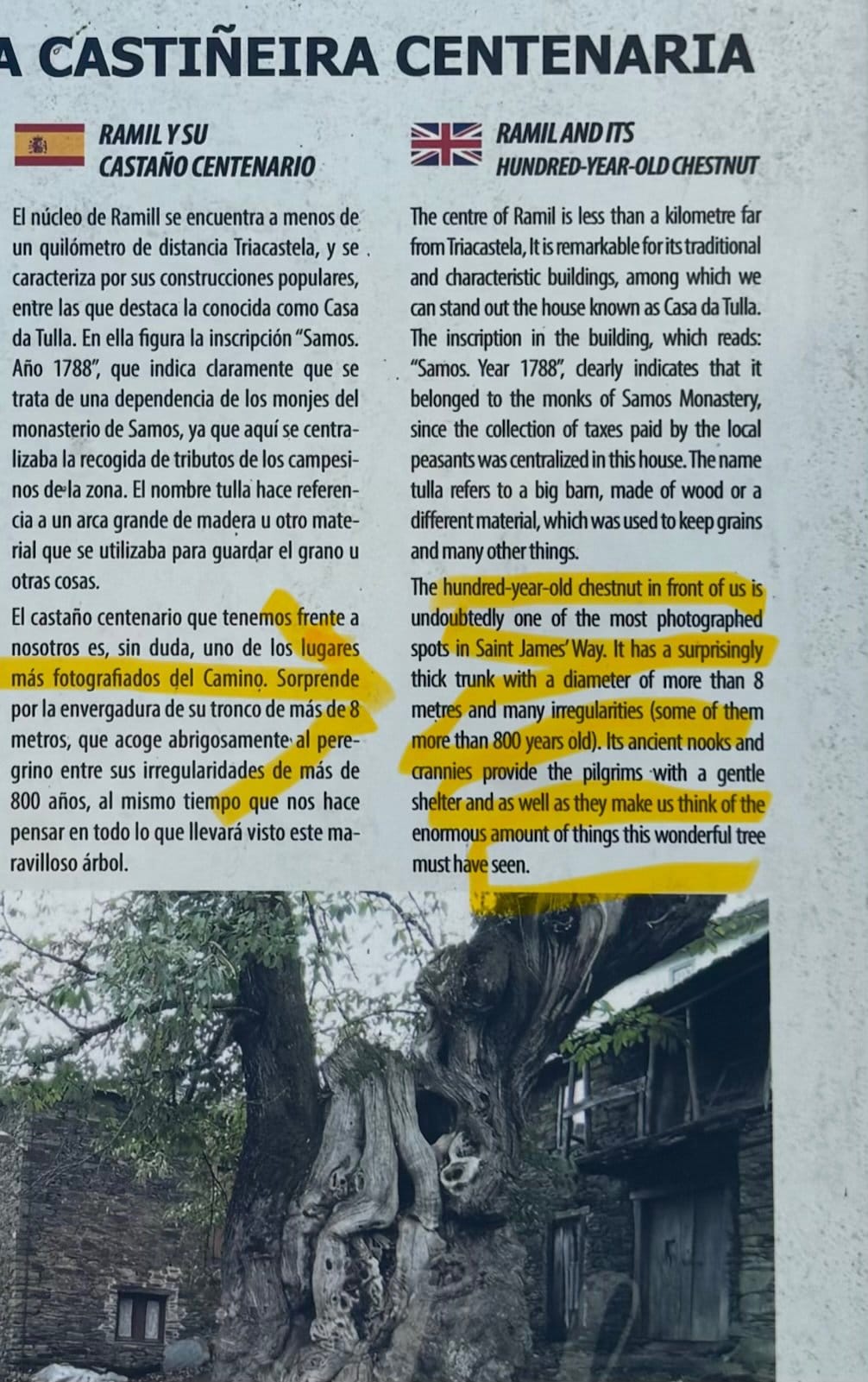
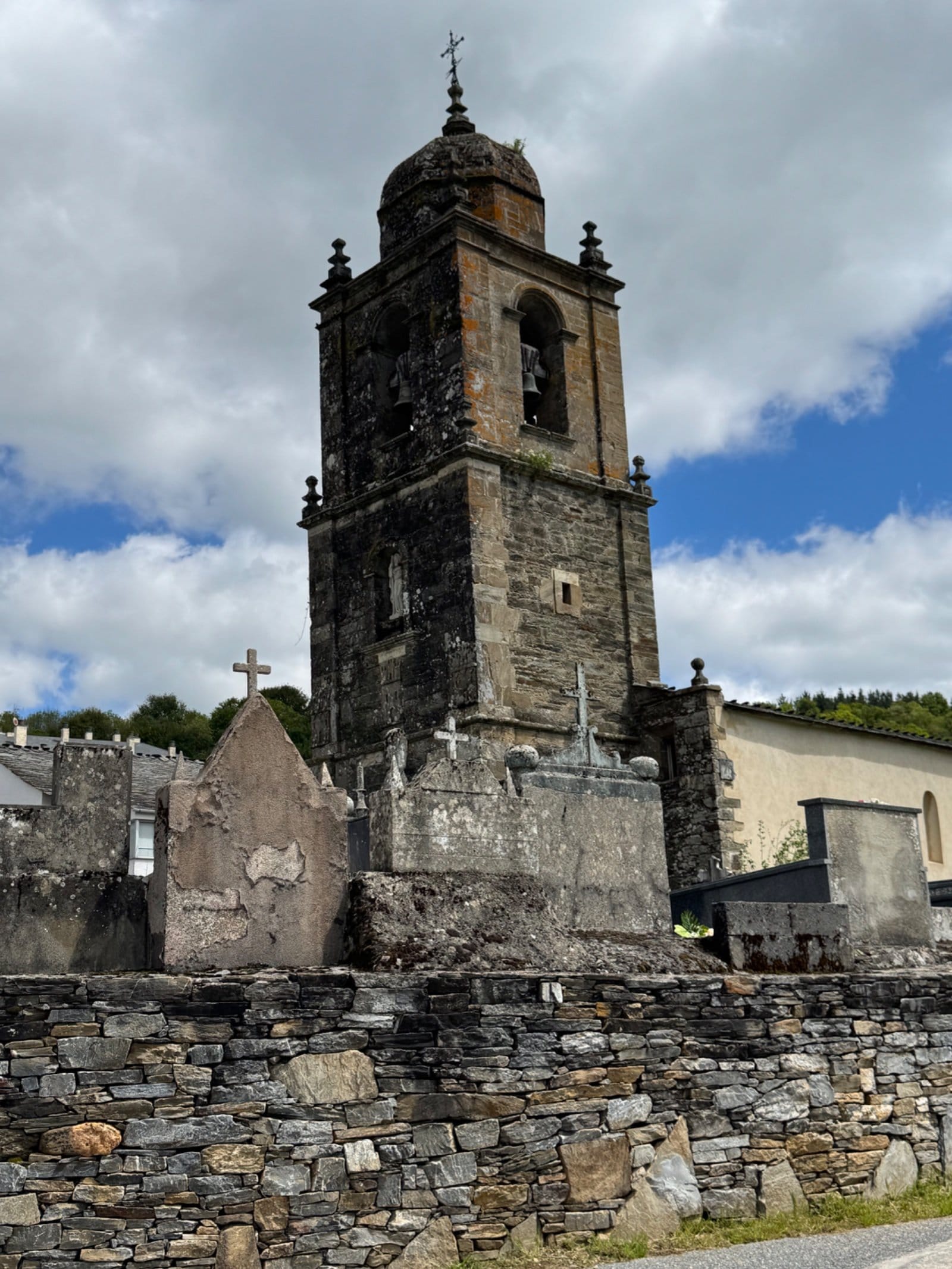
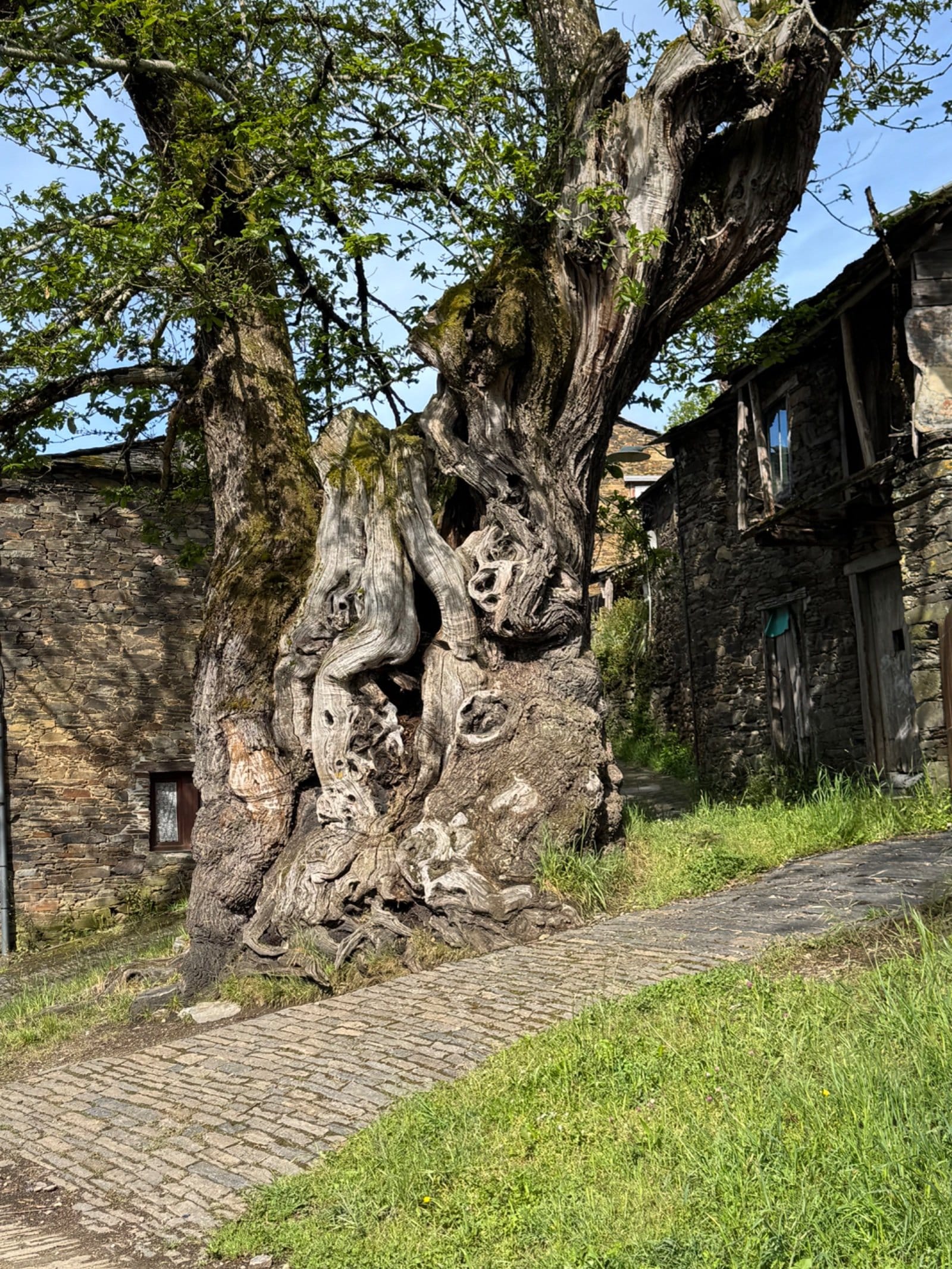
The highlights of the village today are the 800 year old, gnarled chestnut tree that greets you as you enter; the Church of Santiago, a small stone church that has welcomed pilgrims for hundreds of years and dates back to the medieval period; and Cova Eiros, cave paintings that date back to prehistoric times.
For such a small village there is tremendous history here. It has been one of my favorite stopping points by far. So what I first thought was going to be a wasted day turned out to be a perfect day. Plus, if I'm honest, my body probably needed a rest.
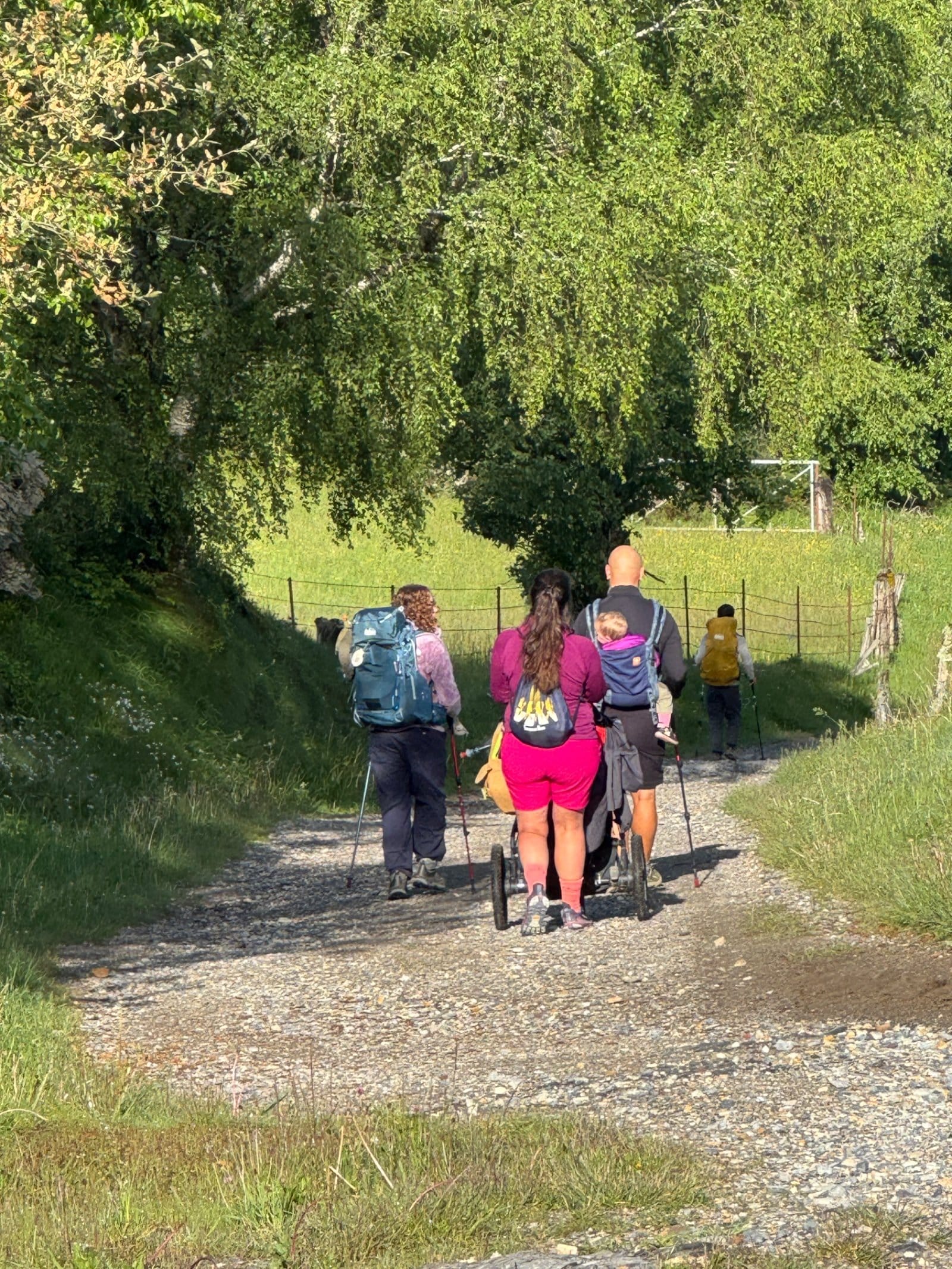
One last encounter—at breakfast this morning there was a couple with two small children, an 18 month old girl and 3.5 year old boy. They are spending 7 weeks walking the Camino, one parent carrying the younger one in a back carrier and the other parent pushing the older one in a jogging stroller, and everyone just as happy as could be. I can't even imagine.
Long day to Sarria tomorrow so I will be on the road early.
Buen Camino